Every company becomes a FinTech in disguise
Why financing is becoming part of the competitive advantage for technology companies.
By Julian Kappus, Co-CEO, Heliad
I recently spent an evening in London with the teams from two of our portfolio companies, FINN and Enpal, at a dinner hosted by Dominik Gansloser from Jefferies. We talked about their businesses, their growth plans and the financing structures behind them. I left thinking about how much of their competitive position is now tied to something customers barely see: their access to capital.
Both companies have built remarkably effective ways of putting institutional money to work in their respective markets. Their products are very different, but the financing behind them has become an important part of how they scale.
It brought me back to Angela Strange's argument, made in 2019 and published by a16z in early 2020, that every company would become a fintech company. At the time, the discussion was largely about businesses adding payments, lending or other financial services to their existing products. That trend has continued, but the part I find particularly interesting today is what happens behind the scenes, once those products start to require serious amounts of capital.
Stripe's September 2026 agreement to acquire Parafin is a timely example. Parafin provides embedded credit through platforms such as DoorDash and Gusto. A few months earlier, it announced an arrangement under which an investment vehicle would purchase up to $300 million of loans originated through its platform. The two announcements illustrate how closely the customer-facing product and its institutional funding can develop together. The acquisition remains subject to closing conditions.
The financing layer behind the product
Embedding payments or credit into software can make life easier for customers and generate an additional revenue stream for the provider. That has been well documented, including by a16z and Bain. The harder part is deciding how the financial product should work economically: who funds it, who bears the losses and how much of the process a technology company should actually own.
I've found it helpful to look at this through examples from our own portfolio.
Nelly operates at the intersection of healthcare workflows and financial services. It brings together processes such as patient check-in, billing, payments and patient financing. The company announced a €50 million Series B in January 2025. What interests me is how naturally those financial functions fit into the daily operation of a medical practice. The product already sits where the invoice and the patient relationship meet.
Enpal takes us into a very different market. Making solar installations and heat pumps accessible to households requires a financing solution alongside the equipment and installation. In July 2026, Enpal and M&G announced a €367 million public securitisation backed by approximately 11,500 residential solar and heat-pump loans, the third issuance in that programme. Several tranches priced more tightly than in the preceding transaction. These are substantial pools of customer contracts that can be financed through institutional capital markets.
FINN is perhaps the clearest example of why the type of capital matters. In February 2025, it announced an asset-backed programme of up to €1 billion to support fleet growth, with funding providers including Citi and Jefferies. In June 2026, the company announced a separate financing package: nearly €100 million in Series D equity, led by Portage, alongside more than €40 million in debt. Fleet financing and financing the operating company serve different purposes. Treating them as separate capital needs allows each to be approached on its own terms.
The common thread across these businesses is that their financial infrastructure influences what they can offer customers, how competitively they can price it and how quickly they can grow. A better funding structure can be as valuable as an improvement to the product itself.
What happens when AI starts executing transactions?
There is an interesting extension of this idea in enterprise AI. Software is increasingly able to carry out tasks rather than simply help people administer them. In procurement, for instance, our portfolio company Lio develops AI agents that can analyse quotes, negotiate with suppliers, onboard vendors and execute purchasing workflows. Lio announced a $30 million Series A led by a16z in March 2026.
As these systems become more involved in commercial transactions, I expect people to look more closely at the financial services that could sit alongside them. Procurement is one obvious setting: purchasing terms, supplier payments, early-payment discounts and potentially financing are all connected. That is a broader industry hypothesis, rather than a statement about Lio's roadmap. And having access to transaction data does not automatically make a software company a good lender.
Physical AI and robotics raise related questions. As deployment grows, customers may prefer to pay for equipment over time rather than fund the full purchase upfront. For specialist hardware, however, the financing is considerably harder than for a fleet of standard vehicles. Residual values, maintenance and the ability to redeploy an asset all matter. I would expect these financing questions to become more relevant as companies such as ARX Robotics and the wider sector scale, although which models prove financeable remains open.
Matching the capital to the risk
Before moving into venture capital, I spent several years in structured finance at Bank of America. That experience still shapes how I look at technology companies, particularly those accumulating assets, receivables or contractual cash flows as they grow.
I tend to start by asking what, exactly, investors are being asked to finance. An unproven product and its team are very different risks from an established portfolio of customer receivables. Both need capital, but they should rarely be funded in the same way.
Equity is often the right choice while the business is establishing itself. Once there are predictable, financeable cash flows or assets, founders can start considering other tools: receivables facilities, equipment financing, forward-flow arrangements and, at sufficient scale, securitisation. Each comes with its own economics, reporting requirements and constraints.
The preparation matters. Are customer contracts consistent? Can performance be tracked by cohort? Who collects the payments? What happens if defaults rise or a financing partner withdraws? These questions are much easier to address before a company urgently needs its first large credit facility.
The economics can be significant. Saving one percentage point in annual funding costs on an unchanged €100 million financing balance translates into €1 million a year before fees and other effects. Of course, the lowest rate is not always the best deal. Covenants, liquidity buffers, refinancing risk and the allocation of losses can be much more important than the headline price.
I would be cautious about encouraging founders to take on debt prematurely. But once a business has assets or receivables that institutional investors can properly underwrite, financing everything through equity can become unnecessarily expensive. Good structuring starts with understanding the risk and finding the capital provider best suited to carry it.
Where Heliad can contribute
This is an area where I believe Heliad can add something useful alongside traditional venture investors. We understand the venture side, but also bring experience in capital markets, structuring and working with institutional investors.
In practice, that might mean helping a founder think through financing options before approaching lenders, preparing the reporting and contractual foundations for institutional capital, or working with the company's CFO and advisers to assess different funding proposals. Sometimes the advice will be to use equity for longer, or to work with a specialist financial partner rather than build a lending operation in-house.
Heliad invests from its own balance sheet through an evergreen structure, without a fixed fund-life deadline. That gives us room to stay involved as a business evolves and its financing requirements change. It doesn't remove the need for investment discipline, but it makes long-term financing conversations a natural part of how we work with companies.
After the London dinner, I kept thinking about how much FINN and Enpal have achieved by treating their financing structures as a core part of the business. The same principle is becoming relevant in more sectors, from healthcare to enterprise AI. I suspect some of Europe's most interesting technology companies will create as much value through the way they finance their products as through the products themselves.
I'd encourage more founders to think about capital markets earlier. For certain business models, the financing strategy can make an enormous difference to how far and how fast they scale.
Sources & further reading
Angela Strange / a16z - Every Company Will Be a Fintech Company (21 January 2020)
Stripe - Agreement to acquire Parafin (30 September 2026)
Parafin/Business Wire - $300 million forward-flow agreement (21 July 2026)
Kristina Shen, Kimberly Tan, Seema Amble and Angela Strange/a16z - Fintech Scales Vertical SaaS (4 August 2020)
Bain & Company/Bain Capital - Embedded-finance value-chain research (12 September 2022)
Nelly’s Series B announcement (15 January 2025)
Enpal/M&G Investments - Golden Ray 3 public securitisation (29 July 2026)
FINN - ABS II fleet financing programme (10 February 2025)
FINN - Series D and accompanying debt financing (24 June 2026)
Lio; a16z -Lio Series A and AI procurement capabilities (5 March 2026)
European Commission - Securitisation overview (Accessed 15 October 2026)
Read more
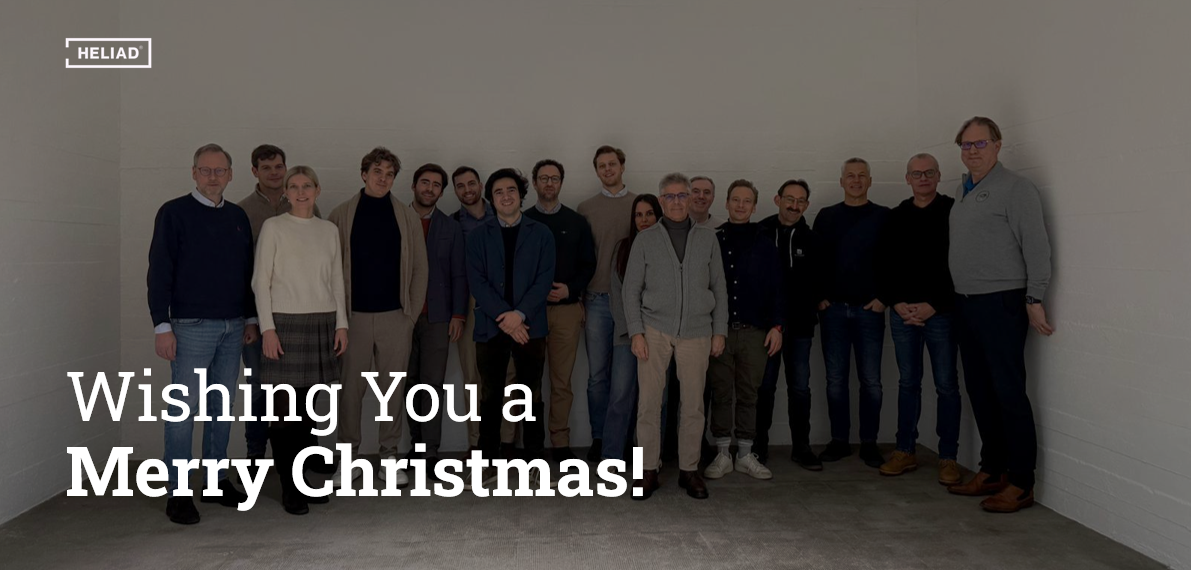
2025 End Year Review
Dear Founders, Investors and Friends of the Venture Community, Across sectors, AI and frontier technologies are reshaping every corner of society; from how we govern and defend, to how we power our homes, manage our money, and deliver healthcare. And yet, we are still in the early chapters of of this transformational era.
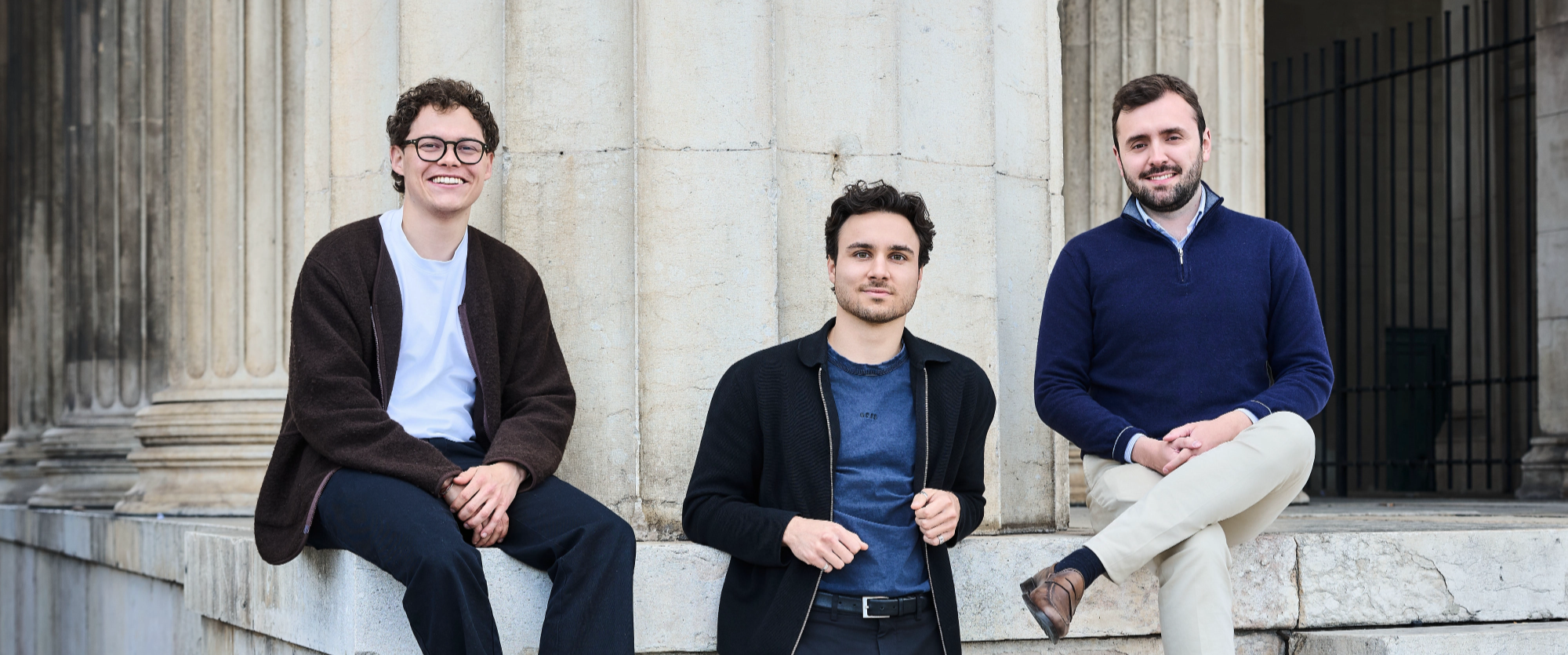
Bayshore raises $8m to turn legal rules into code
Munich-based startup Bayshore has raised an $8m in seed funding led by Earlybird Venture Capital, with participation from Lucid Capital, Booom, Heliad, and strategic angels.
Enpal closes out its Series C round with a €150 million investment from Softbank
Frankfurt am Main, 19th October 2021 – Enpal, a portfolio company of Heliad, has raised €150 million ($174 million) from